Have you seen the note on the fabric requirements: *with nap or *without nap?
“Nap” means that the tiny fibres lie in one direction on the surface of a fabric.
Think about a directional print on a fabric, a streetscape where all the houses are one way up. To make a skirt from this fabric, you need to ensure that all pattern pieces lay in the correct direction. Otherwise you’ll end up with panels showcasing upside down houses.
On small pieces you may not notice a difference if a piece is cut upside down, but on a larger surfaces like a skirt panel, there will be an obvious difference if the fabric has nap. The light may reflect off the surface differently, the look of the fibres may be quite different when held “up” vs “down”.
Usually more material is required if fabric has nap. Ensure you are placing all your pattern pieces in the same direction if your material has nap, or a print or a weave all in one direction, or if it has a surface, like velvet. Obvious diagonals may also require you to follow a layout for fabric with nap.
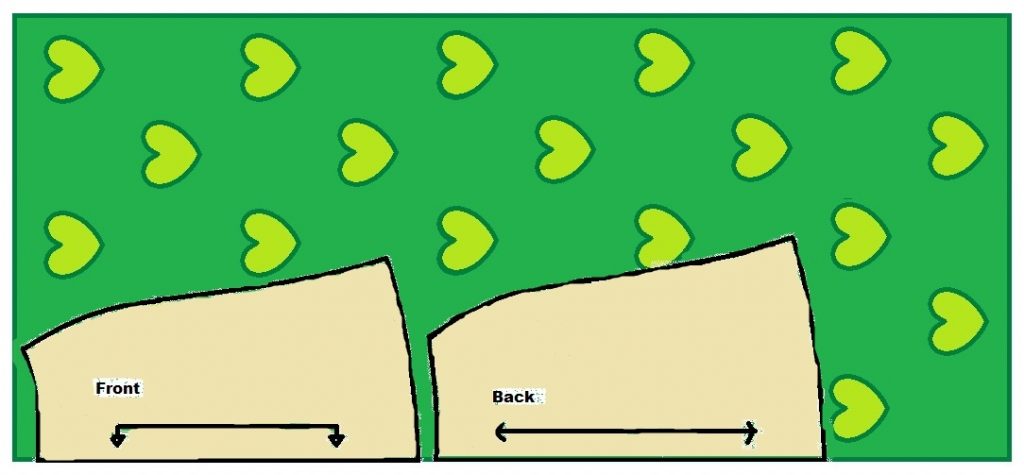
Image from Student Designer. (2011). How to Make a Dress – Part 3: How to Lay Your Sewing Pattern Out On Your Fabric. [online] Available at: https://sabrinawhartonbrown.wordpress.com/2011/10/03/how-to-make-a-dress-part-3-how-to-lay-your-sewing-pattern-out-on-your-fabric/